Abstract
There is overwhelming evidence that bias exists in employment decisions, creating an unequal chance for hiring candidates. The present study examined two factors, gender and the type of presentation used, to investigate whether bias exists in these predictors. Specifically, the work answered whether men (or women) have a greater (or lesser) chance of being hired based on their gender alone. In addition, the odds of being hired were examined for the type of presentation used, namely audio recording or transcript, which is particularly relevant in light of the increasing technological capabilities of HRM practices.
A sample of 146 respondents was used for a subjective assessment of job applicant acceptance, in which they were asked to rate the likelihood of being employed based on gender and presentation type, randomized on a basis. Mann-Whitney tests revealed no significant differences between the levels of the independent variables, indicating that neither gender nor presentation type had a significant influence on the employment decisions of the candidates. The findings contradict the existing academic and official data, highlighting the need for further research and the exploration of additional factors that influence the decision-making process.
Introduction
Topic Justification
Biases and prejudices remain as relevant in the modern world as they were in the past, influencing people’s perceptions of one another in various aspects of life. Certain race-, gender-, and age-based stereotypes permeate interpersonal relationships despite multiple attempts to eliminate this factor in some regions of human interaction, such as job hiring. Gender inequality in pre-employment assessment refers to a widespread phenomenon in which evaluators tend to prefer candidates of a specific gender, often based on assumptions that a certain gender is better suited for a particular job. While it seems logical that a person’s professional skills and experience must be the primary metrics to evaluate their fitness for a particular position, other unrelated factors often affect employers’ decisions. Some innovations, such as gender- and race-neutral application forms and various benefits provided by digitalizing the process, might have reduced the role of the human factor.
However, some of these approaches avoid tackling the root cause of the issue, which is bias and prejudice. Instead, they complicate the hiring process and force some employers to seek alternative ways to exercise their subjective judgment, for example, through the requirement for an audio-recorded job pitch. As a result, various traditional employment inequalities are exacerbated, while new complications arise due to the failure to address the underlying problem: inherent biases of any interpersonal interactions. Studying the topic in more detail across different contexts can help pave the way towards a more inclusive working environment, starting from the pre-employment assessment phase, and potentially resulting in mutually beneficial outcomes. Considering the current stage of the global employment equity movement, it is possible to assess the actual impact of existing practices to evaluate their effectiveness and identify potential areas for improvement.
Literature Review
A significant body of research exists on gender inequality in the workplace, particularly at the employment stage. Rattan et al. (2019) argue that evidence demonstrates a significant and consistent gender bias against women, especially in traditionally male employment settings and occupational fields. These include management, science, technology, engineering, and math, affecting women’s hiring prospects, salaries, and career opportunities over the long term (Rattan et al., 2019). Roper (2019) cites several studies on the representation of women in science and academia, showing that, all else being equal, evaluators often favor male candidates. Candidates with “male” names are consistently offered better job opportunities than female candidates based solely on the written job description, a trend common among evaluators of both genders (Begeny, 2020).
Raghavan et al. (2020) discuss how modern information technologies have been utilized in various contexts to optimize pre-employment assessments and mitigate the impact of bias on the final decision. Current technological capabilities enable audio and video analysis in addition to traditional scenarios, although authors have highlighted various ethical and legal controversies associated with this approach (Raghavan et al., 2020). Gebru (2020) notes that traditional AI training methods may perpetuate gender bias in employee evaluations, rather than eliminating it, due to the initial distortion of input data. Despite the potential bias in audio and video job submissions, some research suggests that this approach may help highlight characteristics of job applicants that cannot be fully captured in transcripts. These include an individual’s thinking ability, clarity of presentation of ideas, the content of their thinking, and their general level of intelligence.
Schroeder and Epley (2015) provide strong evidence in favor of this by demonstrating that evaluators consistently showed greater interest in audio excerpts compared to the same excerpts presented as transcripts across several experiments. However, other research suggests that various factors, such as a candidate’s perceived social class, can influence hiring outcomes, contributing to economic inequality and introducing a new type of bias (Kraus, 2019). Ultimately, these conflicting data highlight the underlying complexities of social interactions in employment, suggesting the need for more research in various contexts.
Rationale for the Study
Existing evidence provides conflicting insights into the current state of pre-employment assessment practices and their cumulative impact on overall workplace equity. However, most researchers and experts agree that bias remains a pervasive problem in various organizations despite numerous attempts to mitigate its impact on the hiring process. Gender discrimination remains a pressing issue, as there is overwhelming evidence of the underrepresentation of women at all academic levels.
While technological advances help reduce some subjectivity in the evaluation process, they also create new challenges that have yet to be fully addressed. Alternative solutions, such as audio presentations of job openings, add dimension to the assessment process, helping to highlight key job characteristics and reduce the impact of demographic bias. However, it is difficult to determine whether these methods are ultimately meaningful in addressing employment inequality. Further research on this topic is needed to develop a more conclusive understanding of the issue, potentially providing valuable insights for managers seeking to implement equity-promoting procedures in their organizations’ hiring processes.
This study aims to identify patterns in pre-employment selection practices in relation to the gender of applicants and the method of presentation. It is expected to be consistent with one or more of the current research perspectives discussed in the literature on the topic, potentially contributing to the development of more robust theoretical and practical paradigms. The study aims to assess the impact of these factors, controlling for other potential influences that may be problematic. Ultimately, it is anticipated that the results will be beneficial to the broader research community and, in a practical context, will aid in addressing current issues associated with the recruitment process. The findings will provide valuable data for developing new pre-employment assessment approaches to reduce workplace inequalities.
Research Questions and Hypotheses
The purpose of this study is to answer the following research questions:
- Will a candidate’s gender affect the likelihood of being hired?
- Will candidates be more likely to be hired if their resumes are submitted as transcripts or audio recordings?
The current study centers on two main aspects: the gender of job applicants and the type of presentation. The research literature overwhelmingly shows that women are disproportionately affected by gender bias in the pre-employment assessment process, indicating the existence of deep-seated gender bias. Notably, both male and female evaluators express similar attitudes, suggesting that gender discrimination is less a gendered issue than a corporate or broadly cultural phenomenon. A review of the academic literature provides somewhat conflicting evidence on the impact of the job presentation type, emphasizing the pros and cons of transcript and audio formats. Thus, while it is difficult to identify a specific trend in this regard, both potential outcomes need to be evaluated.
Based on these research questions, the following hypotheses are proposed. To test the first research question:
- H10: The gender of candidates does not affect their likelihood of being hired.
- H11: There is a gender bias in hiring that results in applicants of one gender gaining an undue advantage over others.
And for the second research question:
- H20: Job presentation does not affect a candidate’s likelihood of employment.
- H21: The type of personal presentation affects a candidate’s likelihood of employment.
Method
Participants
Samples were generated and submitted for statistical analysis by the instructor. The sample consisted of 146 participants, which included 76.0% (n = 111) females, 23.3% (n = 34) males, and 0.7% (n = 1) transgender individuals. The mean age of the participants was calculated to be 38.8 years (SD = 11.0). The maximum age of participants was 75 years, and the minimum was 18 years, the lower threshold for participation in the survey project.
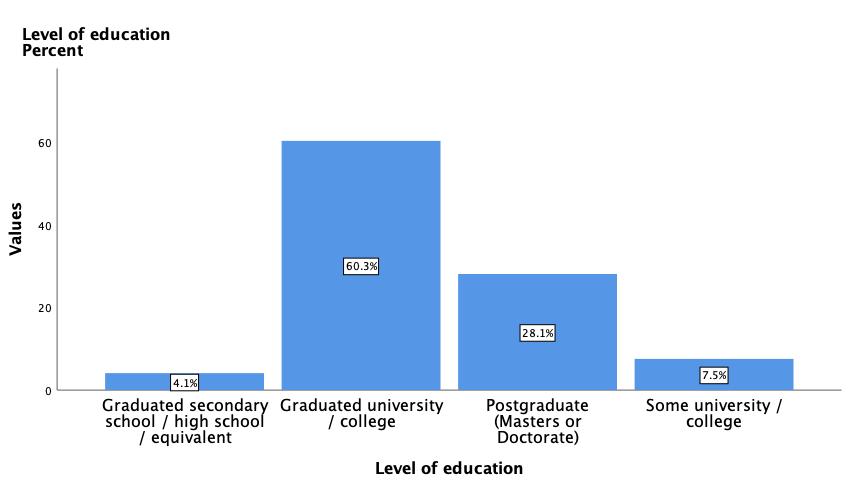
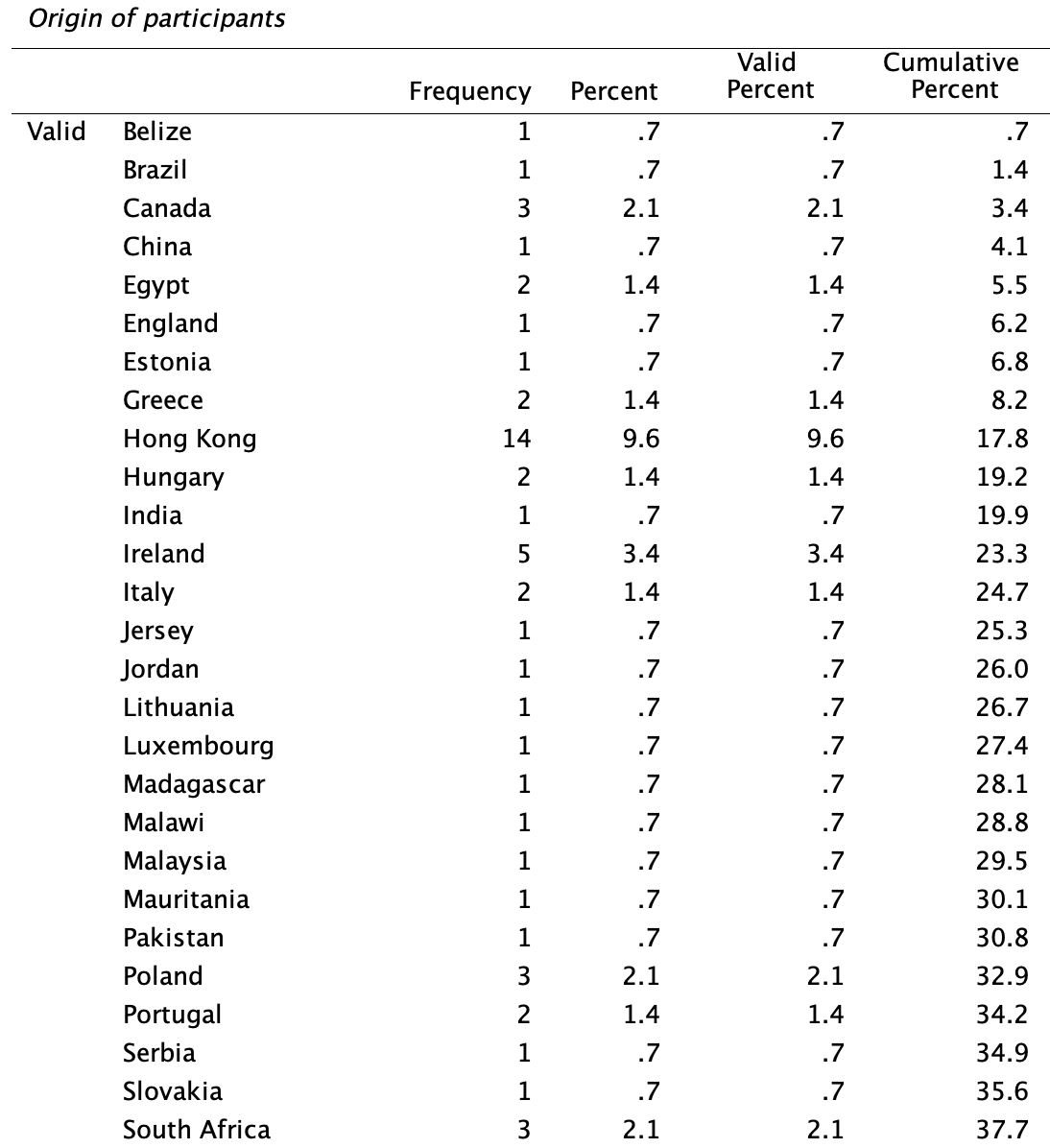
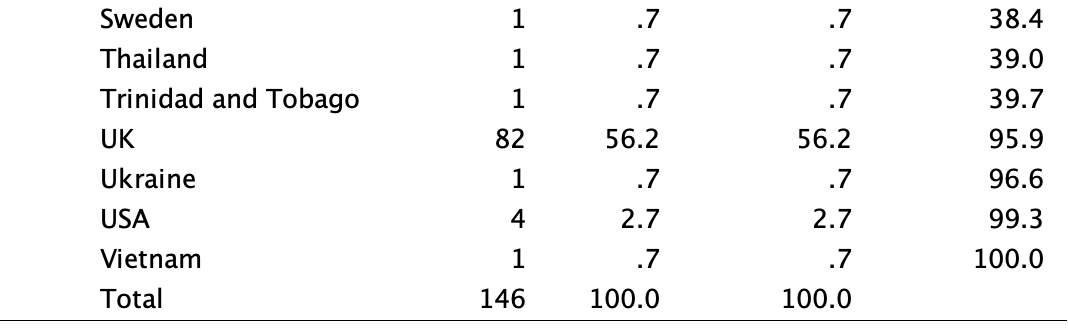
Respondents were asked about their geographic origin, and 35 countries were represented (Appendix A). The vast majority of participants (56.2%, n = 82) were from the UK, and among the key trends, Hong Kong (9.6%, n = 14), Ireland (3.4%, n = 5), and the USA (2.7%, n = 4) were also represented. The levels of education in the sample were examined. As shown in Figure 1, a dominant number of respondents (60.3%, n = 88) had completed university or college, with a minority of participants (4.1%, n = 6) having only a high school education.
Design
The present study employs a quantitative paradigm designed to investigate the relationships between variables. A cross-sectional design is used to examine a slice in time, which means the data collected reflects the trends of the sample outside the context of time (Wang & Cheng, 2020). The study does not propose manipulating the independent variable, rendering it non-experimental (Rogers & Revesz, 2019).
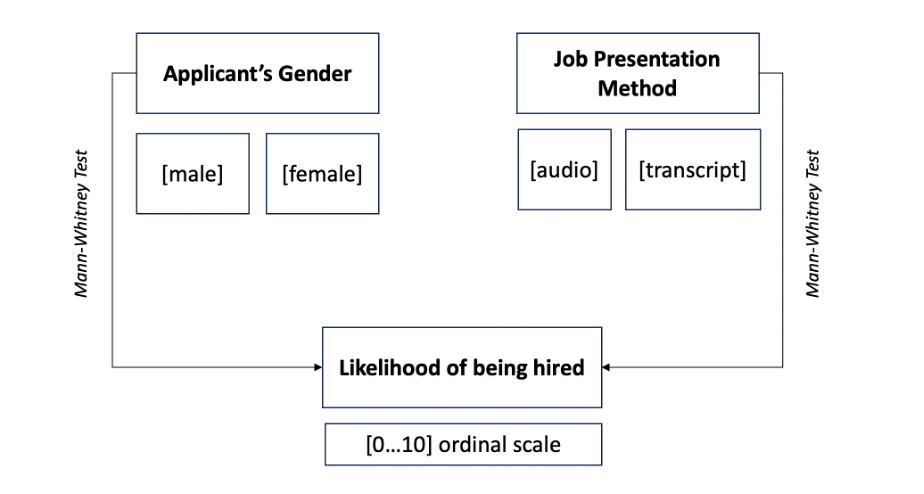
Since the paper aims to answer two research questions, two attributes are used as independent variables: applicant gender and type of presentation, each with two categorical levels. The dependent variables for both questions are the probability of being employed, measured on an ordinal scale from 0 to 10, where a higher value corresponds to a greater likelihood of being employed. The conceptual framework, which outlines the available variables and the selected statistical tests, is presented in Figure 2. The study is based on data analysis that includes information on the participants’ job application methods and their gender, examining their probability of employment.
Materials
The teacher provided the data for the study and the distributions of values collected from real respondents. The primary tool used for analysis is IBM SPSS, which is justified by the vast possibilities for automatic and accurate calculation of test results and the tool’s accessibility (Wagner III, 2019). The literature was collected using specialized databases and carefully screened for reliability, citability, and plausibility. Inclusion criteria were used to select them: writing in English, publication date no earlier than 2015, and consistency between the journal in which the article was published and the scientific material itself. Transcripts and audio recordings of male and female job seekers were used for the survey research.
Procedure
The sample was asked to rate the likelihood of a man and a woman being employed using different forms of self-presentation. Specifically, sample members were randomly offered either audio recordings or transcripts of the job seeker’s presentation and then asked to rate on a ten-point scale how likely they thought this candidate was to be employed. For statistical analysis, the sample data were uploaded into SPSS and checked for the informativeness and practicality of the records.
The task of this step was to clear the work field, remove unnecessary survey items, and identify values that could have been recorded in error and would have negatively impacted the analysis outcomes. Specifically, the variable participant_private_id was removed from the dataset, containing information about participant identification numbers that were not relevant to the purpose of the study. Since all rows in the dataset were filled in and contained no blank elements, no additional processing was performed.
Results
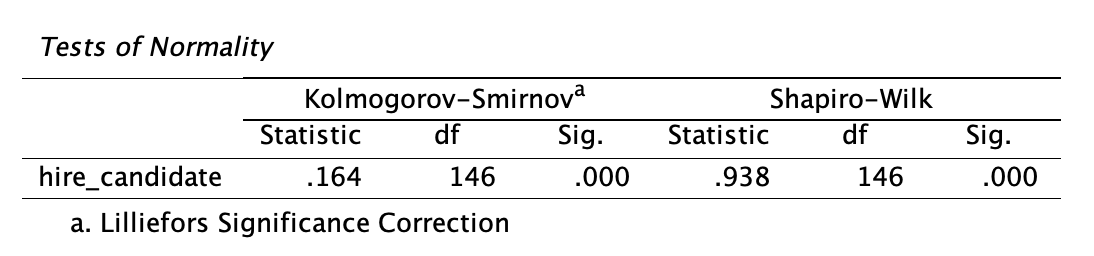
The normality of the distributions of the dependent variable should be examined, as the outcomes of this analysis will determine the choice of statistical test. Since the sample consisted of 146 records (≥50), the Kolmogorov-Smirnov test was used to assess the normality of the distribution. The results (Appendix B) show that the distribution does not lend itself to a normal trend (D(146) = 0.164, p =.000) — therefore, a non-parametric counterpart must be used.
Given the nature of the variables used, the research questions, and the normality test results, the Mann-Whitney Test was employed as the statistical approach. This method is used when the independent variable is represented strictly by two categorical levels and the dependent variable is defined continuously or on an ordinal scale (SL, 2021). All other assumptions for performing this test, including the ordinal scale of the dependent variable, the categoricality of the independent variable, the presence of strictly two levels, and the independence of the observations, were satisfied.
Effect of Gender
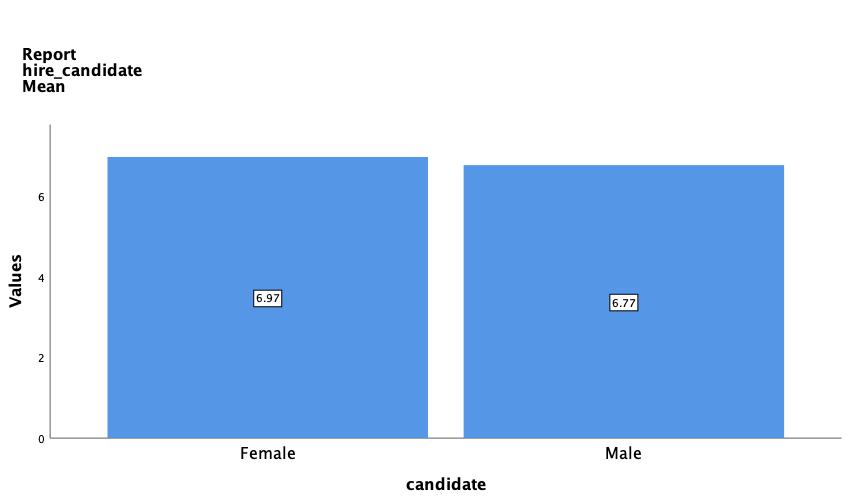
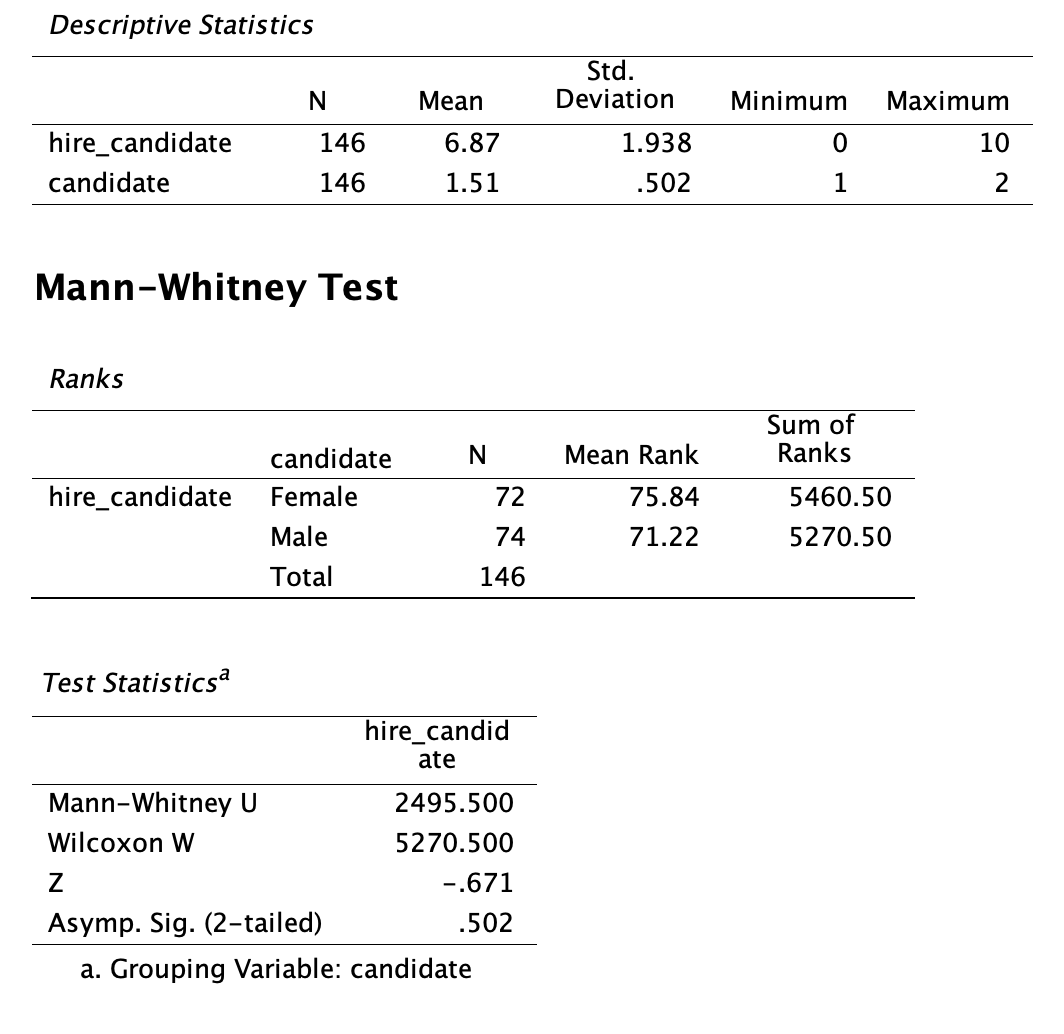
The results of the Mann-Whitney Test (Appendix C) for gender showed no significant differences between the male and female groups in terms of their employment likelihood (U = 2495.50, p =.502). The outcomes show that the mean values in this measure for males (M = 6.77, SD = 1.90, SE = 0.22) and females (M = 6.97, SD = 1.99, SE = 0.23) were not significantly different (Figure 3), and thus gender cannot be a predictor for the probability of being employed.
Effect of Presentation Type
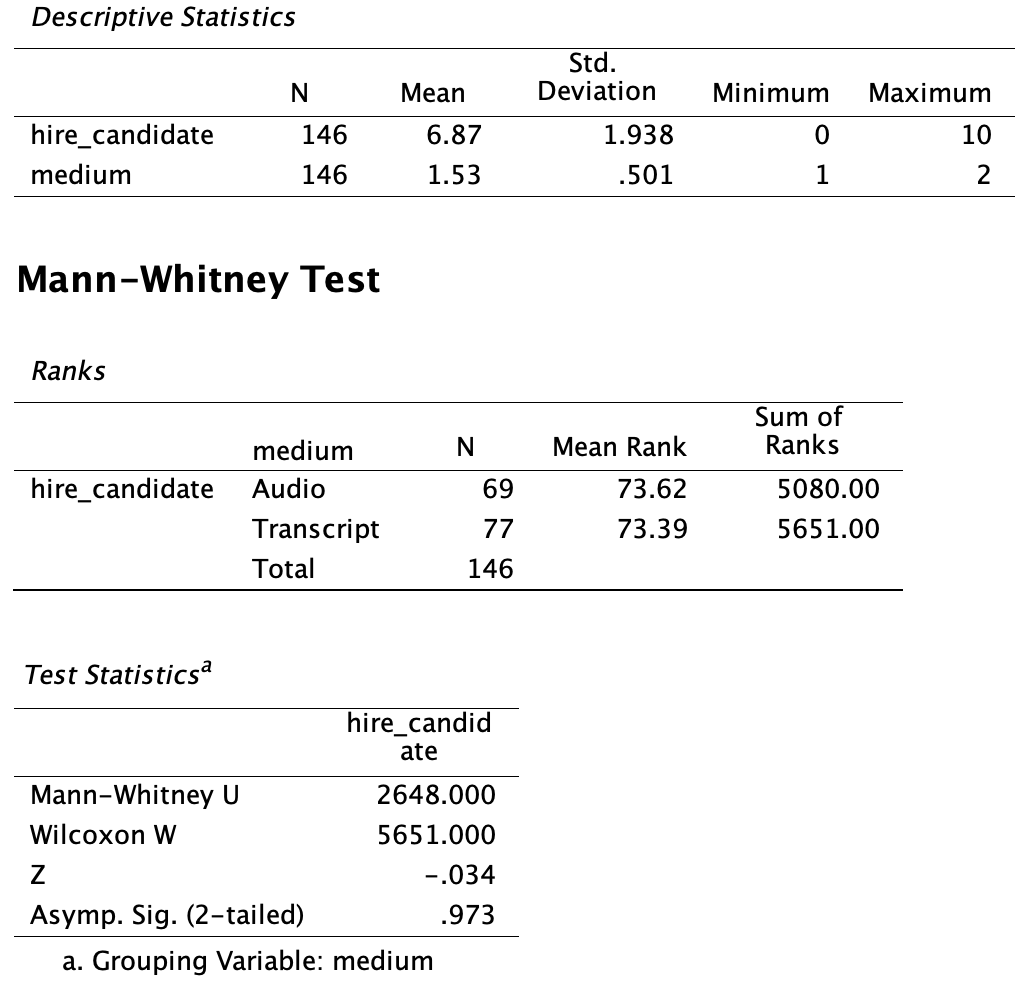
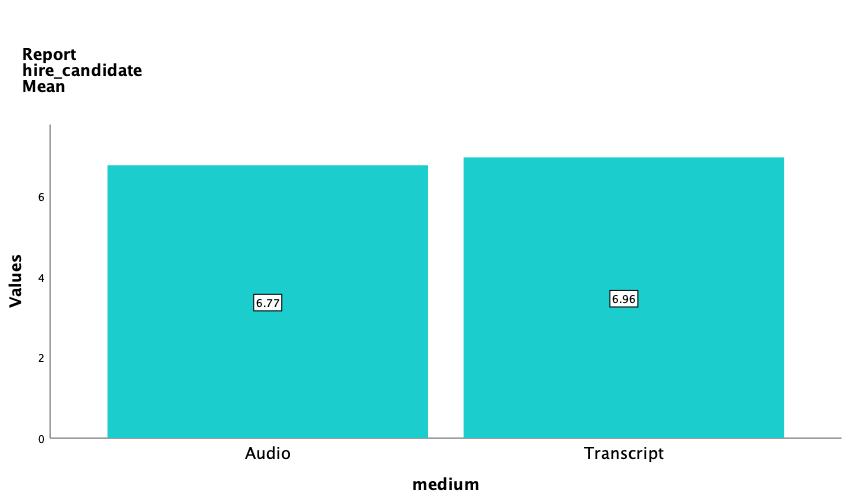
The results were identical for the type of self-presentation for employment. The Mann-Whitney Test outcomes (Appendix D) showed no statistically significant differences between the two types of presentation (U = 2648.00, p = 0.973). It was found (Figure 4) that when audio recordings were used as a method of self-presentation (M = 6.77, SD = 2.11, SE =.25), the estimated probability of being employed was not significantly lower than when transcripts were used (M = 6.96, SD = 1.78, SE = 0.20). When candidates turn to transcripts instead of audio recordings (or vice versa) to increase their chances of employment, there is no statistical justification.
Discussion
Interpretation of Results
The present work focused on the study of predictors that have the potential to influence the probability of being employed. The variables studied were the candidate’s gender and the type of self-presentation during job placement. The distribution of the dependent variable did not follow a normal trend, so the non-parametric Mann-Whitney U test was used. Both tests yielded identical outcomes: neither gender nor presentation type was found to affect the likelihood of employment, and men and women, as well as those presenting in the form of a transcript or audio recording, had statistically indistinguishable odds. The findings answered the research questions, and, significantly, both hypotheses were rejected.
Academic Evidence
Placing the findings in a pool of previously published evidence allows us to assess the potential consistency of the available findings with what has been shown by previous authors. Studies have repeatedly shown that employment preferences are more often given to men than to women (Rattan et al., 2019; Roper, 2019; Begeny, 2020). In official statistics, trends persist: Eaton (2022) recognizes that women are generally half as likely to be hired as men, with 25% of female candidates having experienced gender discrimination. The UN reports that around 90% of men and women have a gender bias against women, which naturally affects job search outcomes (UN DP, 2020).
If anonymous interviews were conducted and HR professionals were unaware of the candidates’ genders, the chances of women securing a position would increase to 46% (Eaton, 2022). It follows that academic and official sources confirm the existence of gender bias against female candidates. However, the results of this study do not support these conclusions because there were no differences in the likelihood of being hired based on the candidate’s gender.
There is disagreement between the current findings and multiple scientific and public confirmations in determining the effect of gender on employment chances. Such a fact may be due to the differential methodological approaches used in conducting the observation or specific properties of the sample collected. It is known that 76% of the participants in the sample were women, which could have created a tendency for increased sympathy towards a female candidate, especially in the context of the global demand for social pro-feminist movements (Vachhani, 2020). However, this assumption goes against the findings of Eaton (2022), who indicated that even female managers are more likely to choose men for the workplace than women.
It was shown that a transcript increases these chances compared to an audio recording. For today’s companies, utilizing technological tools for hiring is not uncommon, and audio and video technologies are increasingly favored to optimize job interview processes (Raghavan et al., 2020; Gebru, 2020). As the number of interview choices increases, the question arises regarding which ones can lead to a higher chance of employment.
Schroeder and Epley (2015) concluded that audio recordings have a greater potential and, therefore, their use would increase these chances. The results of the present study again disagree with the academic literature, as it has been shown that the choice of presentation type does not affect the chances of being hired. In part, this may be justified by the findings of Kraus et al. (2019), who showed that many more factors, including the candidate’s social status, influence the assessors’ final decision.
It should also be remembered that listening to candidates’ voice recordings is inextricably linked to the immediate perception of that voice. Thus, assessors may base their decision on the applicant’s intellectual, personal, and professional qualities solely on their first impression (McCluney et al., 2021). In other words, the observed lack of meaningful differences between the two types of work presentation may be due to the candidates’ voice patterns and not reflect real trends.
Implications
The findings have several theoretical and practical implications that warrant separate discussion. In terms of practical implications, the analysis outcomes show that neither gender nor presentation type is essential. Thus, it does not make sense for job seekers to worry about employment biases. Any choice of presentation type out of the two will result in a statistically indistinguishable outcome, so the candidate can choose the one that is most convenient for him or her. In terms of theoretical results, the discrepancies found in comparison to published evidence suggest that many additional variables are influencing the final decision, including factors that directly describe assessors. Thus, this creates a need for more knowledge on predictors of employment, as the current findings are inconsistent.
Limitations and Suggestions for Future Research
The present work has several limitations, some of which could be addressed in future extensions. Firstly, the study sample was heavily skewed towards women, which may create bias in the results, as many of the evaluators were women and may have experienced bias towards a female candidate. Second, there was an underrepresentation of gender groups, as the sample included only one non-binary person, which does not allow for a clear indication of trends in their evaluative preferences. Third, the study was self-reported, and the honesty of respondents’ choices was not assessed. Fourth, participants were provided with few audio recordings and transcripts, which may have created a bias in the results because the materials were not diverse enough.
In addition to addressing the identified limitations, this study has avenues for further expansion. Specifically, it is suggested that additional variables — such as ethnicity, age, experience, and country of origin — be included to assess potential biases in candidate employment decisions. Expanding the sample size would achieve normality of the distribution, which in turn would provide opportunities for parametric tests that could be used to validate current findings. Another direction for future projects is the addition of video recording as a type of presentation, which becomes especially relevant with the increasing popularity of remote work and remote HR interviews (Green, 2022). There are several promising avenues for the present study to develop that will address the differences found in the findings and expand valuable knowledge about the impact of biases in employment.
Conclusion
The present work assessed gender and instrumental bias concerning candidates’ employment decisions. The work examined whether women (or men) are more (or less) likely to be hired based solely on their gender. As a second question, the work sought to determine if there was a difference in the chances of being employed based on whether the candidate presented themselves through a transcript or an audio recording.
The Mann-Whitney test yielded unequivocal conclusions that neither gender nor the type of medium used made a difference in the likelihood of being employed: women and men, as well as audiotape and transcript, gave statistically equal odds. Given the current disagreement with published academic literature, this provides a strong impetus for future research involving new variables that will further our understanding of the reasons for candidate selection and, in the long run, address the problem of employment bias.
References
Begeny, C. T., Ryan, M. K., Moss-Racusin, C. A., & Ravetz, G. (2020). In some professions, women have become well represented, yet gender bias persists — perpetuated by those who think it is not happening. Science Advances, 6(26), 1-10.
Eaton, B. (2022). 4 Examples of gender discrimination in hiring practices — And how to address them. Vervoe.
Gebru, T. (2020). Race and gender. In M. D. Dubber, F. Pasquale, & S. Das (Eds.), The Oxford handbook of ethics of AI (pp. 253-269). Oxford University Press.
Green, A. (2022). Post covid-19: Expectations for academic library collections, remote work, and resource description and discovery staffing. The Journal of Academic Librarianship, 48(4), 1–13.
Kraus, M. W., Torrez, B., Park, J. W., & Ghayebi, F. (2019). Evidence for the reproduction of social class in brief speech. Proceedings of the National Academy of Sciences, 116(46), 22998-23003.
McCluney, C. L., Durkee, M. I., Smith II, R. E., Robotham, K. J., & Lee, S. S. L. (2021). To be, or not to be… Black: The effects of racial codeswitching on perceived professionalism in the workplace. Journal of Experimental Social Psychology, 97, 1-12.
Raghavan, M., Barocas, S., Kleinberg, J., & Levy, K. (2020). Mitigating bias in algorithmic hiring: Evaluating claims and practices.
Rattan, A., Steele, J., & Ambady, N. (2019). Identical applicant but different outcomes: The impact of gender versus race salience in hiring. Group Processes & Intergroup Relations, 22(1), 80-97.
Rogers, J., & Revesz, A. (2019). Experimental and quasi-experimental designs.
Roper, R. L. (2019). Does gender bias still affect women in science? Microbiology and Molecular Biology Reviews, 83(3), 1-9.
Schroeder, J., & Epley, N. (2015). The sound of intellect: Speech reveals a thoughtful mind, increasing a job candidate’s appeal. Psychological Science, 26(6), 877-891.
SL. (2021). Mann-Whitney U test using SPSS Statistics. Laerd Statistics.
UN DP. (2020). Almost 90% of men/women globally are biased against women. UNDP.
Vachhani, S. J. (2020). Envisioning a democratic culture of difference: Feminist ethics and the politics of dissent in social movements. Journal of Business Ethics, 164(4), 745–757. 745–757.
Wagner III, W. E. (2019). Using IBM® SPSS® statistics for research methods and social science statistics. Sage Publications.
Wang, X., & Cheng, Z. (2020). Cross-sectional studies: Strengths, weaknesses, and recommendations. Chest, 158(1), S65-S71.
Appendix A — Geographic Characteristics of Respondents
Appendix B — Results of the Kolmogorov-Smirnov Test
Appendix C — Mann-Whitney Test results for Gender
Appendix D — Mann-Whitney Test Results for Presentation Type